
Atari Token Wallet
Most multi-chain wallets are scaffolds. Sign a transaction and the abstraction collapses.
The Problem
A multi-chain crypto wallet looks easy from the outside. A token list. A balance view. A send button. A chain switcher. The marketing screenshots write themselves.
The engineering reality is different. Each chain has its own RPC behavior, its own gas model, its own confirmation semantics, its own failure modes. A wallet that supports six cryptocurrencies isn't six wallets stitched together — it's a backend orchestration layer that has to reconcile six different consensus models, six different fee markets, and six different transaction lifecycles into a single user experience that feels coherent regardless of which chain the user is operating on.
Most teams who attempt this ship a single-chain wallet with a chain switcher slapped on top. The list shows six tokens. Five of them don't actually work end-to-end under real transaction load.
What we built
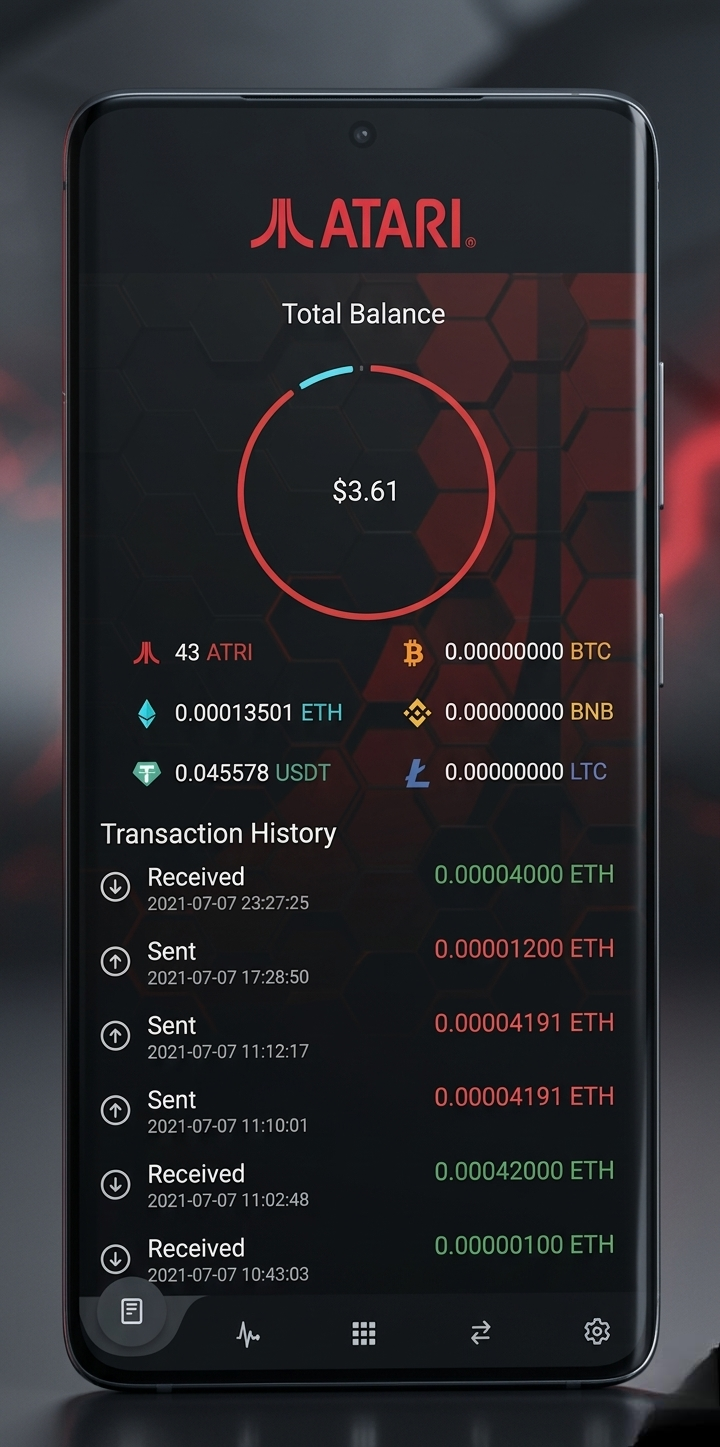
The Atari Token Wallet is a production multi-chain crypto wallet supporting ATRI, BTC, ETH, BNB, USDT, and LTC. Web and mobile surfaces. Full backend orchestration. Private chain infrastructure handling live transactions in production as part of the broader Atari ecosystem.
The architecture is built around a backend coordinator that abstracts chain-specific differences away from the client surface. The wallet's frontend talks to one orchestration layer; that layer talks to six different chain backends, each engineered with awareness of its own chain's behavior — Bitcoin's UTXO model, Ethereum's account model, BSC's EVM compatibility, Polygon-side bridging behavior, native LTC handling.
The wallet as part of the ecosystem — The wallet doesn't live in isolation. It's the identity layer for everything else AlgoCoder built in the Atari engagement: it connects to the Atari Casino Metaverse to authenticate gameplay sessions, it holds the tokens used for in-product NFT purchases, it interfaces with the Atari Token backend and the Atari Portal at atarichain.com, and it bridges into the private chain infrastructure that the Atari ecosystem ran on.
Web + mobile parity — The wallet ships across web and mobile surfaces with feature parity. The mobile builds went through the platform-specific submission processes; the web build operates as a browser-based wallet surface integrated with the Atari Portal.
Live transactions in production — The wallet was operating against live transaction volume — not testnet, not staging. Real ATRI transfers, real BTC sends, real on-chain settlement against the Atari ecosystem's live token economy.
The architecture decision that mattered
Backend orchestration over client-side bridging. A common pattern in multi-chain wallet design is to put the chain-handling logic in the client — every supported chain is a library bundled into the wallet binary, and the wallet talks to RPCs directly. That works for hobbyist wallets. It collapses at production scale.
The Atari Token Wallet took the opposite approach — a backend coordinator that owns the chain-specific knowledge. The client wallet talks to one well-defined orchestration API. The chain-specific complexity (RPC failover, fee estimation, mempool monitoring, confirmation tracking) lives behind that API where it can be operated, monitored, and updated without shipping a new wallet build to every user.
The trade-off is that the wallet depends on the orchestration backend being available. The trade-off is acceptable when you're operating that backend as production infrastructure (which AlgoCoder was, for the Atari ecosystem). It would not be acceptable for a self-custodial wallet operating in adversarial conditions.
Atari Token, smart contracts, exchanges, backend
The wallet was one deliverable inside a broader Atari Token engineering effort. The same engagement produced:
- The Atari Token itself
- The Atari Token smart contracts
- The Atari Token backend and server infrastructure
- Atari Token exchange integrations
- The Atari Portal at atarichain.com (the public-facing portal the wallet integrates with)
All of the above is part of the ICICB-managed Atari blockchain ecosystem engagement.
What this case proves
Multi-chain wallet engineering at production scale — not a single-chain demo with a chain switcher slapped on top, but real backend orchestration handling six cryptocurrencies and live transaction volume. Web + mobile delivery. Integration with a private chain ecosystem and a consumer-facing metaverse product. The wallet that the Atari Casino Metaverse runs against.